
Véronique, dairy farmer

Hello Mrs Goesel. Can you tell us a bit about yourself?
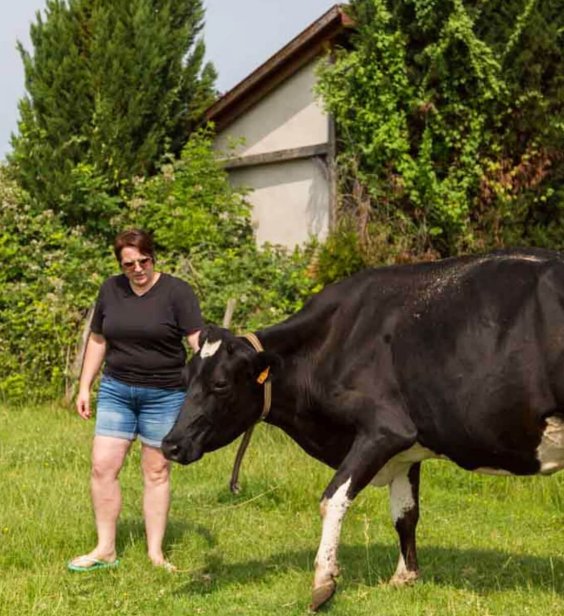
Hello, my name is Véronique Goesel and I work for Gaentzig, an EARL or limited liability farm. When it was created in 1989, it was a family farm, my in-laws' farm to be exact. I decided to join my husband in the dairy business five years ago.
Did you retrain for your career change?
After 20 years as an employee in a large company, I decided to retrain. I joined my husband on his parents' family farm. When the farm changed from a collective farming group (GAEC) to an EARL, I started milking our dairy cows as well as working in the fields.
How many cows do you have on the farm?
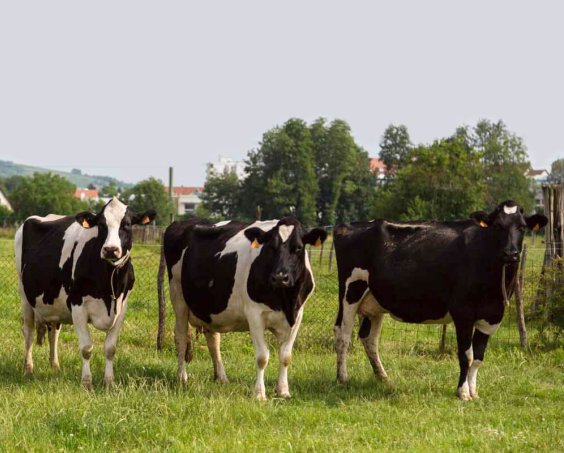
We currently have 37 dairy cows on the farm. But our main activity is not just milk production. We also grow cereals and have 10 hectares of vines.
What is your role on the farm?
At first, I worked a lot in the vineyards, but after some health problems, I work solely on milking the cows. Once the morning and evening milking is finished, I take care of the administration as well as the children. And yes, a dairy farmer also has a life as a mother!
What is a typical day like for you?
So, I get up at 6:45 am and go to the cowshed for the morning milking. I usually finish around 8:30, 8:45 if all goes well. Then, I go to the office to take care of all the administration. When you're a farmer, you not only have to look after the herd, but also deal with e-mails and emergencies.
Then, there's milking again in the evening. It generally starts around 6 pm and finishes around 7:30 pm. And in the evenings, we organise our direct milk sales. In other words, the locals come straight to us to buy their milk.
This is my typical day. For my husband, it's a bit different. He gets up around 7 am to go and feed the 37 cows and then he joins me to finish milking or goes straight out into the fields or vineyards. Each day is a bit different depending on what there is to do. In the evening, he goes back to the vineyards. So, between the two of us, the days are long, but we still have ten days of holiday!
What are the advantages of having pastureland on your farm?
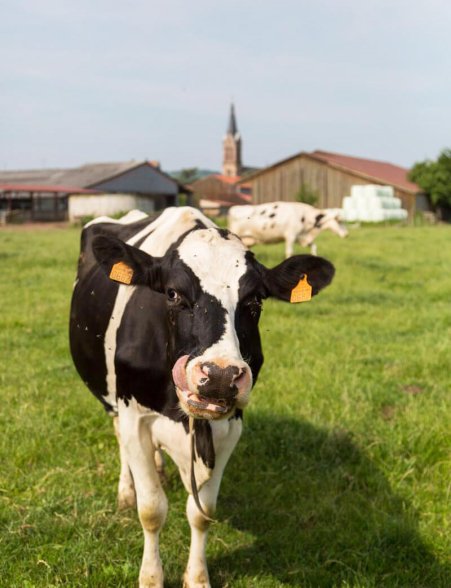
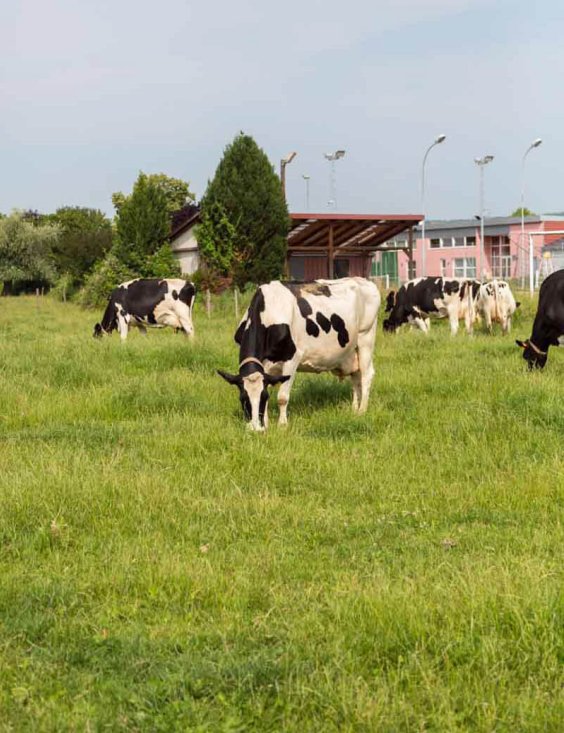
Nowadays, I don't know anything else, so I can't imagine having a farm with animals that don't graze. And then, I'm happy to see my cows in the fields around the house. And for the record, the locals are just as happy to see them. Some even take the apartments nearby just so they can see them.
Are they free to go out when they want?
This year, the weather was fine quite early, so we let them out when the ground was dry. And throughout this time, they can come and go as they please. We usually bring them in in November. However, it all depends on the weather; if it's still not too bad, we leave them outside as long as possible.
I'd like to leave them outside all the time, but it's not really possible. It would mean far too much work for us. They're happy anyway because we leave them outside as long as the weather permits.
Do you have any advice for young people wanting to enter the profession?
No... Ha ha ha, I don't give advice (laughs). Taking over a dairy farm isn't just about buying a herd of dairy cows. You also need to have land behind you, otherwise the investments won't be profitable.
Do you prefer whole milk or skimmed milk?
In the past, I used to drink whole milk, but as I'm watching my cholesterol, I reduce the fat by heating it and then skimming it off, ha ha ha.
And do you prefer bibeleskaes or yoghurt?
For our own use, I make homemade yoghurts and fromage blanc, and I'm trying my hand at Greek yoghurts. I even have a customer asking me for milk to make cheese. But on the farm, we only sell milk directly, and it's up to the customers to process it as they wish.
The neighbours don't know that you can come and buy milk directly from the farm. We're not very well known and we don't advertise, so it's hard to find us. In recent years, we've had a lot of Turks come because it's part of their culture. They drink a lot of curds or make cheese from it.
What can we hope for you for the future?
Is an increase in the price of milk a good answer? If we stop dairy farming tomorrow, we'll go into beef farming because we don't want to give up everything. My husband's father gave us the land, so we don't want to lose it all.
Good luck!