
Mathieu, dairy farmer

Can you tell us a bit about yourself?
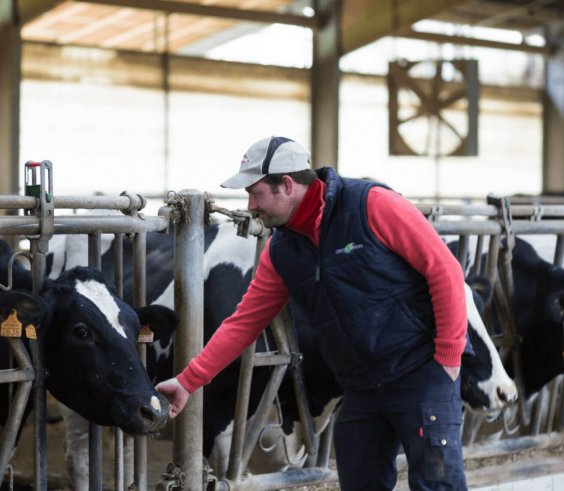
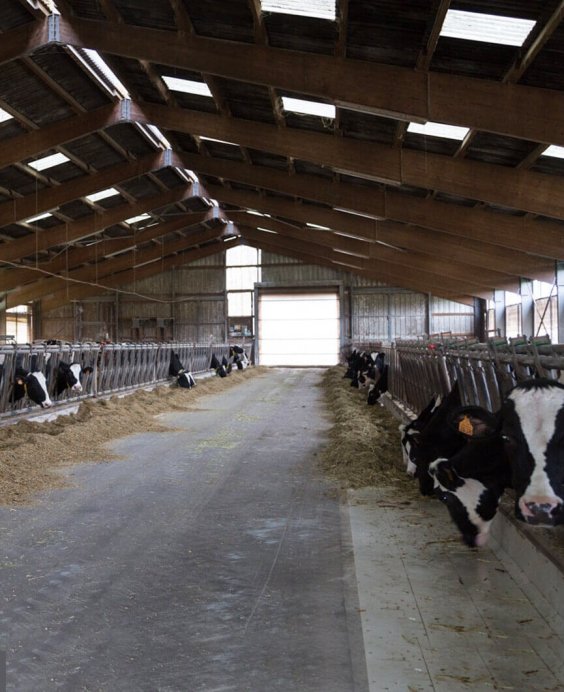
Hello and welcome to the Goehry family farm. I set up in business with my parents in 2003 when I was 24. I then chose to develop the farm's dairy unit. To do this, we had to modernise the equipment and improve the comfort of the animals to improve milk production.
We started by moving out of the village. In fact, it was civic gesture so we had more space but, more importantly, to be less of a nuisance to neighbours who no longer have to put up with the smells of the past.
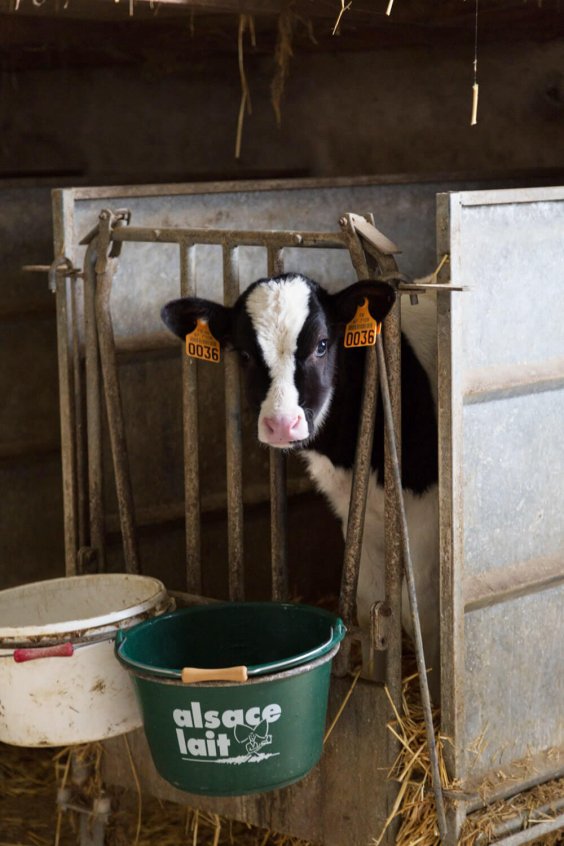
Animals are living things, 365 days a year. We have a lot of calving all year round. That can make a lot of noise and we can't predict it. Being outside the village allows us to run our day-to-day business more calmly and to work in better conditions.
How many cows do you have?
We've expanded considerably in recent years. We now have about 70 dairy cows producing 650,000 litres of milk a year.
Our development has been possible because five farms have stopped producing over the years. We have recovered some of their production.
Have you been a dairy farmer for long?
Yes, I've always been a dairy farmer.
These days, it's impossible to start out in dairy farming from scratch. The costs of a farm are very high, both for buying the animals and for the buildings. The returns don't allow you to start from scratch.
And let's not forget the know-how, some of which you can learn at school, but which is mostly passed down from generation to generation.
Can you tell us about your milking system?
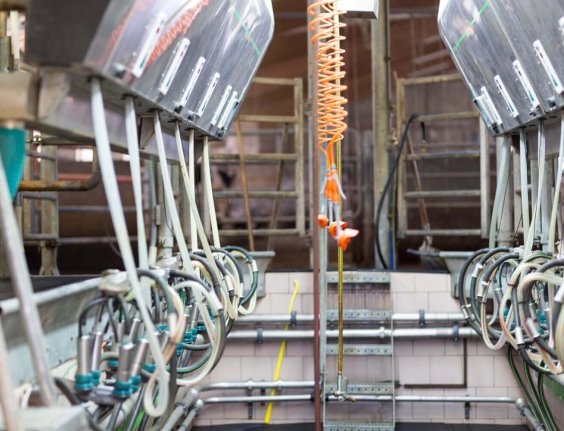
We moved into this building in 2005 with the cows. So, that's 12 years now. In 12 years, there have been many changes in dairy systems. So we're still using what you might call an old system.
We attach the cows to the milking machine manually and the system detaches automatically when milking is complete. But overall, the system is well automated. We're positioned below the cows, which makes for a comfortable working.
Are you familiar with the stages involved in milk processing? Milking, pasteurisation, skimming... It's quite a process.
What are the advantages of your job?
I don't have a boss... I'm the boss. It's one of the biggest advantages of being a farmer.
I don't know if you can talk about advantages or a vocation, but farming is a vocation above all else, whether you produce milk or cereals. It's a job we're passionate about, which is why we're still here today.
Our mission is to feed people. We use nature to serve people. Our work has meaning.
What has changed since you started out?
Agriculture in general has invested heavily in technology. It is a dynamic sector in the financial world. We can't escape automation. These are great developments.
Originally, the job was very physical, but that's not necessarily true today. On the other hand, like many other jobs, it's very demanding and stressful.
What breeds do you have?
On my farm, we produce milk. When it comes to milk production, the Prim'Holstein breed is the obvious choice, as it produces the best milk both in terms of quality and quantity.
How many milkings do you do a day?
We do two milkings a day. One in the morning at 6 am and one in the evening at 5 pm.
Do you have any advice for young people wanting to enter the profession?
Yes, I think that a young person wanting to start in the business absolutely has to gain experience. You shouldn't set up in business straight after your studies.
I think you need to go through periods of salaried employment or partnership to really discover all the facets of the job.
Today, we realise that those who succeed are those who master the tools and their environment. If we take the example of milk production, it's important to know what's going to happen to the milk, what the outlets are, why it's produced... Because behind all that, there are consumers. It's also essential to have a good understanding of a farm's costs.
Let's not forget the history of each farm either. Each farm is different because of its history and the way it has been handed down. All these factors need to be taken into account when you want to set up or take over a farm.
As a producer, do you prefer bibeleskaes or yoghurt?
Ah, I'm more into yoghurt...
Would you like to show people around your farms?
Yes, we have open days on our farms every year; any opportunity is a good one to show consumers around our environment.
Thank you, Mathieu, and may your family farm go on and on.