
Edith, dairy farmer

Can you tell us a bit about yourself?
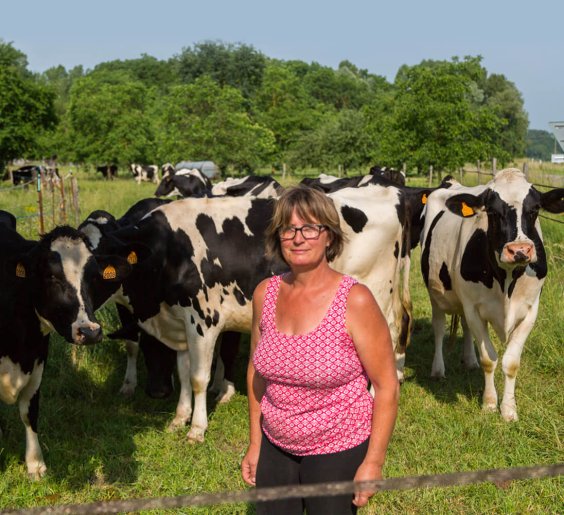
Hello, my name is Edith Bentz, I'm 51 years old and I own a farm with about 30 animals, including 18 dairy cows. I've been a dairy farmer for several years now.
Can you tell us more about your passion for your profession?
I've always lived in the farming world. I've been deeply involved in this world ever since I was a little girl. I took over the family farm in 2000. At the time, my parents' farm was already being run by a woman: my mother. Thanks to her experience, she gave me a taste for work and for doing things properly.
How do you feel about being a woman in this profession today?
On a day-to-day basis, it doesn't cause me any problems. On the contrary, it's all good fun!
Have you noticed any changes in your job since you started?
Since I set up outside, I've had a lot less work. In other words, we produce the same amount of milk, and sometimes even more, with less physical effort.
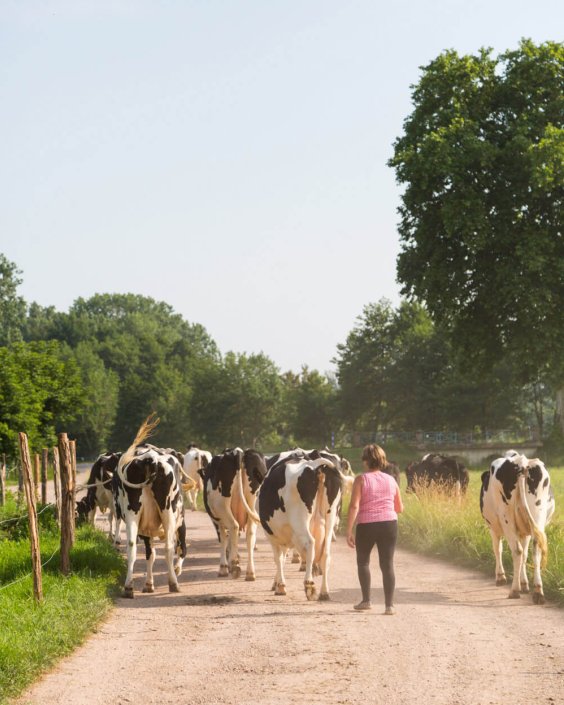
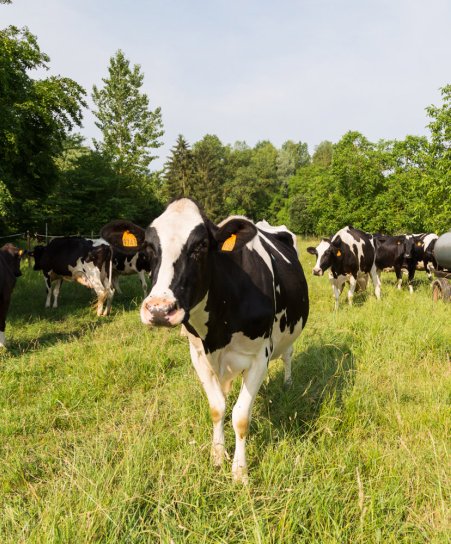
From spring and throughout the summer, our cows go out into the fields. This way, we have less work to do in the cowsheds. Finally, the biggest advantage and the thing I'm most happy about as a dairy farmer is the well-being of my cows. It's the image we give and it's rewarding.
How many cows do you have on the farm?
My herd currently consists of 18 dairy cows. Each year, we have a quota of 115,000 litres of milk + 10%, which represents 125,000 litres of milk in total. Since we've made organisational improvements, we've increased our production by 100 litres every other day.
Well, when I say organisational changes, I mean that the milking system remains the same, but we no longer move the cows around every day. They can come and go as they please. This increased production clearly shows that they appreciate good, really fresh grass.
Do you have any advice for young people wanting to enter the profession?
I think the best advice I can give them is to work on small farms. Because, unlike on big farms, firstly, we really are working with nature.
And secondly, running a smaller farm allows us to work in a sensible way. When I start my working day, I know that at 7 pm, after the last milking, my working day will be over.
Finally, I'm not sure that on a farm with 200 cows, the workload is the same...
I think that's important, because the lifestyle we want to have is partly linked to our daily life. In the evening at 7 pm, 7:30 pm, I'm back home and I can enjoy being with my family while resting.
Can you recognise your cows?
Yes, I know them all! So, they don't have little names, but I can recognise them. When one of them isn't there, I notice straight away and I know which one it is. At first, I recognised them mainly by their numbers, but now I know them all. And be warned, not all of them are nice!
When your cows are out in the fields, what are your typical days like?
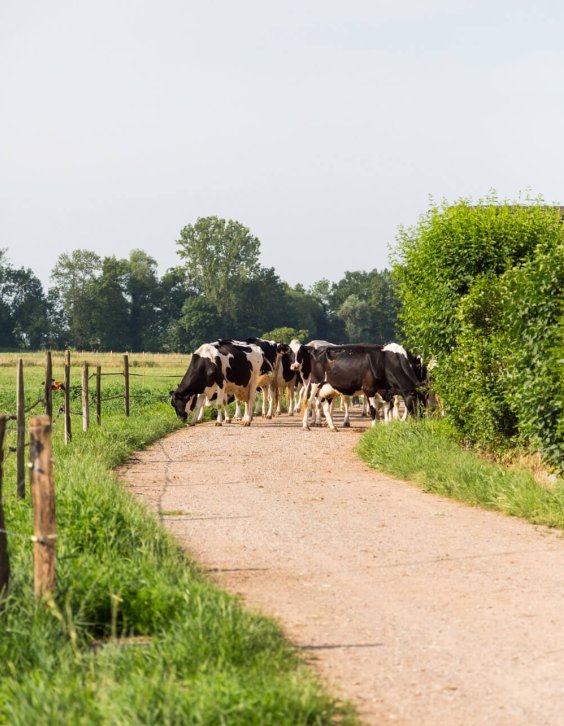
Well, a typical working day for us is often the same thing. In the morning, we do the milking. Then, we clean the cowsheds and all the stalls. Then, we take them out into the fields and finally, I go off to work in the vineyards in the afternoon.
I usually come back home at lunchtime to make something to eat and have a bit of a break.
And to finish my working day, in the evening, I take them back to the cowsheds for milking and they go outside until I go home.
Do you prefer whole milk or skimmed milk?
Ah, I prefer whole milk!
And bibeleskaes or yoghurt?
I couldn't choose because I really like both of them!
What can we hope for you for the future?
Good luck!