
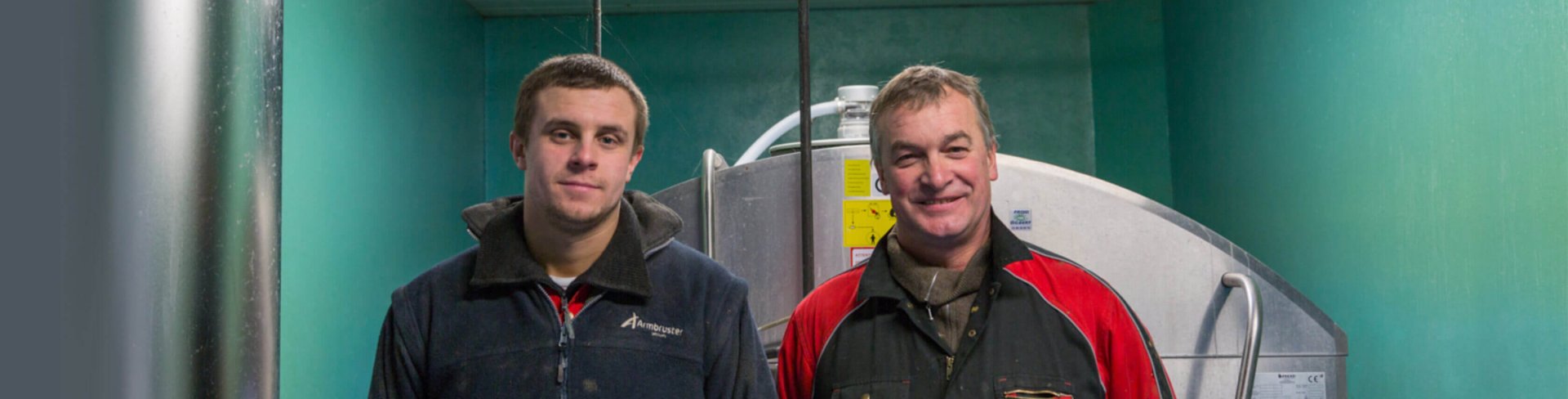
A responsible agricultural sector


Alsatian dairy farmers are helping to preserve their most important working tool: the land.
They want to pass on a preserved land, the values of respect for living things and a passion for their profession to future generations.
A regional dairy industry
Alsace Lait is an independent dairy cooperative. It brings together about 200 milk producers who supply the dairy, located in Hoerdt in the Bas-Rhin department of Alsace, on a daily basis.
The milk is collected by the Cooperative's tanker lorries which criss-cross the roads of Alsace, visiting more than 170 villages within a 150 km radius of the dairy.
As part of its regional development, Alsace Lait is looking for new producers.
For more information:
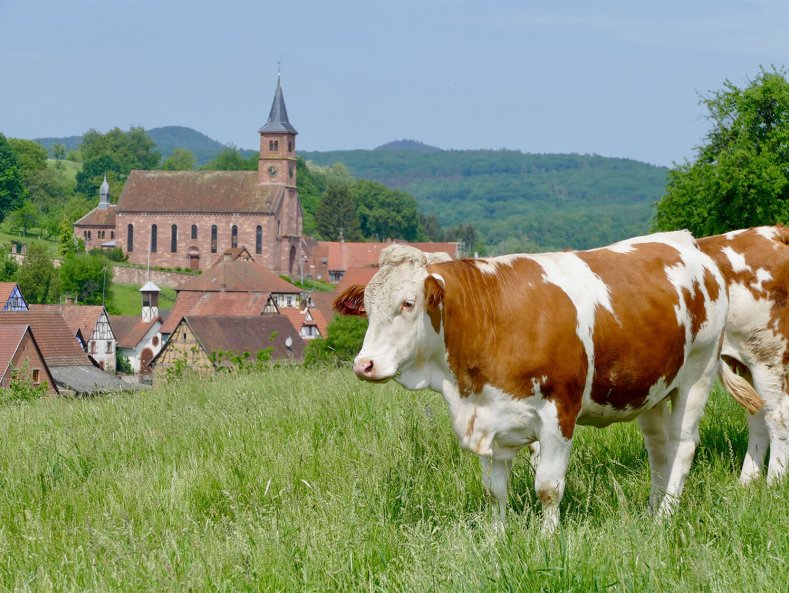
The well-being of our cows
In addition to being a seven-day-a-week job, raising dairy cows is also a passion.
This is why our producers care about the well-being of their cows and comply with the Charter of Good Farming Practices.
Every day, they feed, care for and milk their cows, providing them with a comfortable living environment.
The cows have access to fresh water and a healthy, balanced diet that respects their metabolism.
What's more, our producers regularly invest in modern facilities on their farms to ensure the well-being of their animals.
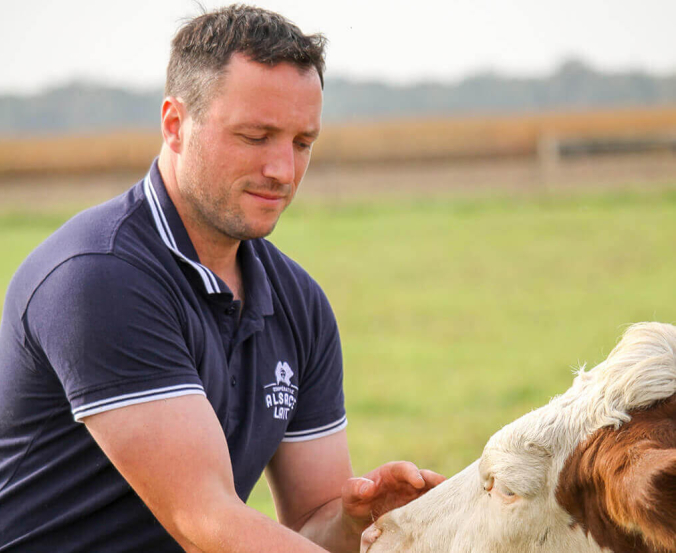
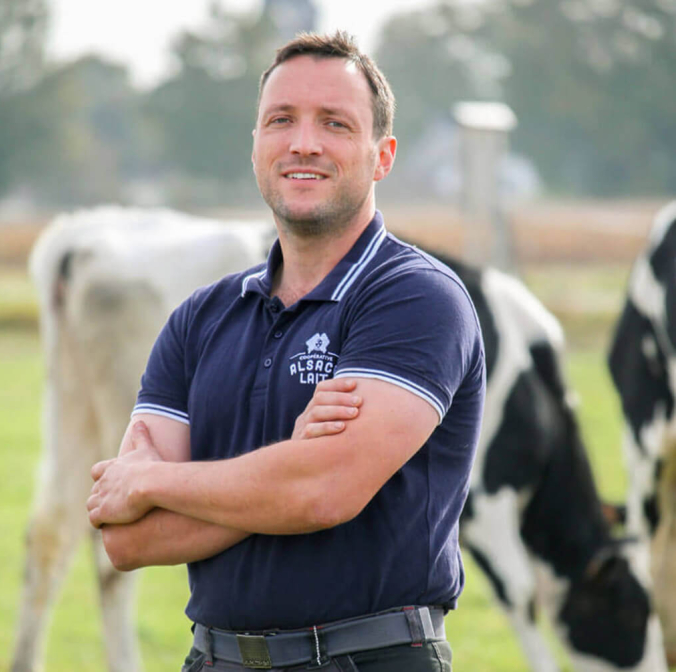
Our dairy production specialists also support our producers with regular farm visits and by assessing the welfare of our cattle according to the Five Freedoms recognised by the World Organisation for Animal Health.
By integrating these principles, we ensure that animal welfare is at the heart of our approach, thereby guaranteeing ethical and responsible farming practices.

A herd fed on GMO-free* feed
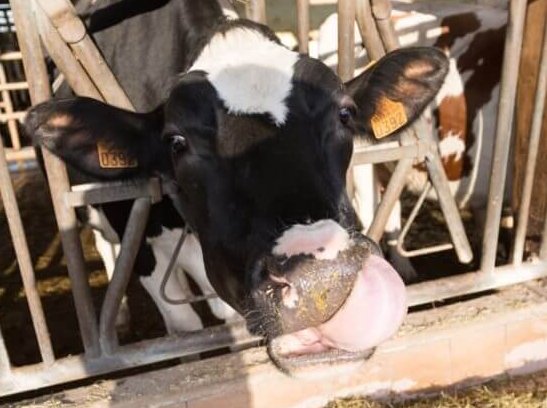

Since 2018, all our milk producers have been committed to feeding their cows on GMO-free* feed.
To achieve this, they produce most of their feed (grasses, cereals, protein crops) on their own land. To supplement their cows' feed, producers only buy feed that is guaranteed GMO-free*, in accordance with restrictive, controlled specifications.
GMO-free* feed represents a significant investment for all producers. To help and support them, the Alsace Lait Cooperative highly prizes the collection of milk from cows that are fed a GMO*-free diet. They therefore receive an additional premium per litre of milk.
* GMO-free: milk from cows that are fed a GMO-free diet <0,9%, contamination fortuite et non évitable, conformément à la réglementation en vigueur.
Fighting against soya-related deforestation
Alsace Lait has signed the Soy Manifesto "Pour une mobilisation des acteurs français pour lutter contre la déforestation importée liée au soja (mobilising French stakeholders to fight against imported deforestation linked to soy)".
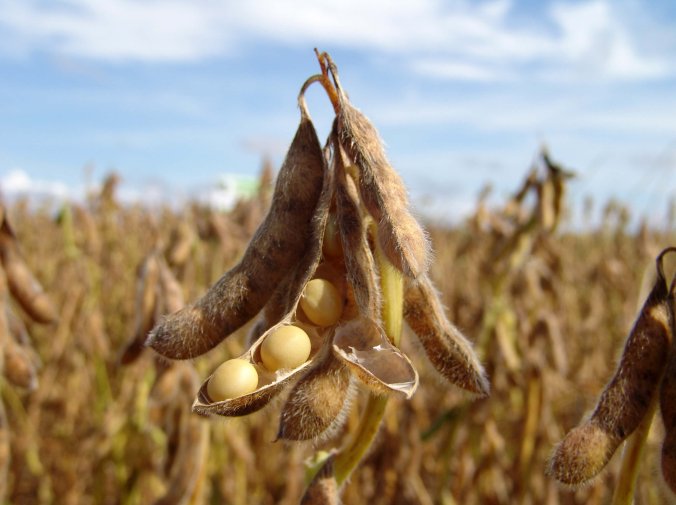
Soya is a protein-rich plant used in cow feed. But soya farms are threatening Amazonian regions with deforestation, particularly the Cerrado savannah in Brazil, renowned for its biodiversity and its role in the natural storage of carbon.
That is why Alsace Lait is working towards deforestation-free soya throughout its supply chain by 2025. Our entire pasture-raised milk sector is already soya-certified, regardless of its origin.
By committing to deforestation-free soya, we are helping to protect ecosystems and fight against climate change.
Pasture-raised milk
When producers' farms allow it, cows graze in the fields in summer. They then return to the cowsheds in winter. On average, our cows spend 170 days a year on pastureland, with a minimum threshold of 120 days a year and 6 hours a day.
By allowing cows to graze, producers are improving their health and well-being, and are also helping to preserve our meadows, which play a role in biodiversity and the fight against climate change.


Our specifications
START OF GRAZING
Low-Carbon Dairy Farm
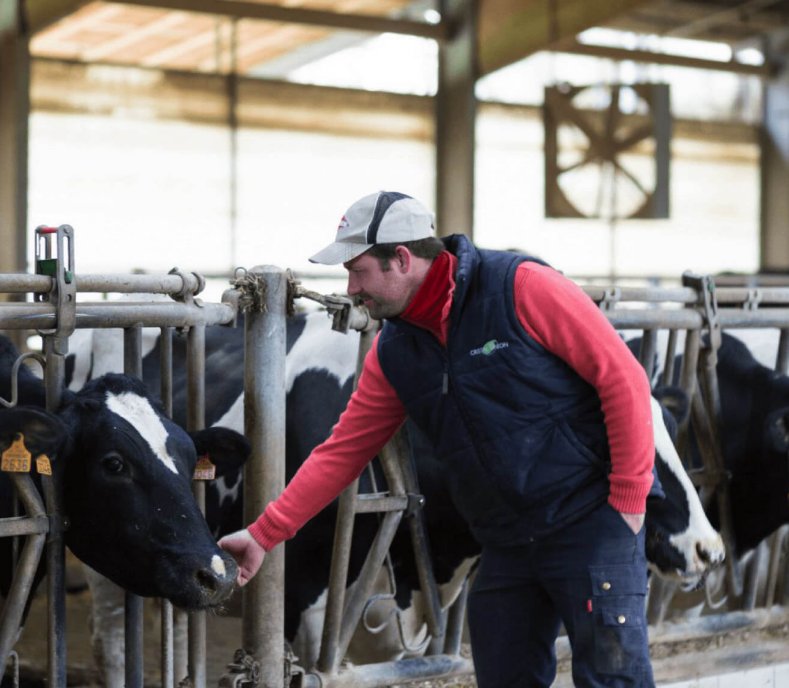
The Low-Carbon Dairy Farm is an industry initiative that supports French dairy farmers in reducing their greenhouse gas (GHG) emissions, based on an individual assessment.
As a result of this programme, our producers can identify levers for action to reduce the carbon footprint of the milk they produce: farming techniques, improved energy efficiency, optimised management of farm effluents, etc.
Our Cooperative aims to audit 100% of its producers by 2026.
Ensuring the future of our dairy industry
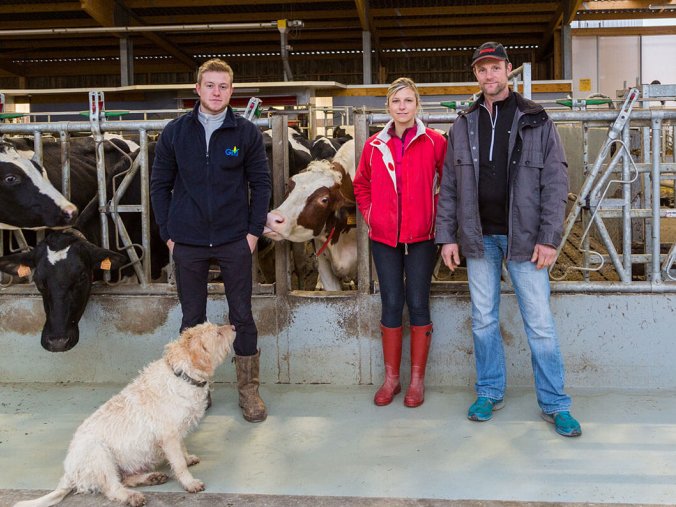
Recognising the importance of supporting the next generation of farmers in setting up in business and ensuring the long-term future of our local dairy industry, our Cooperative has implemented a range of support schemes grouped together under our 'Young Farmers' charter: assistance in becoming a Cooperative member, training and technical monitoring, discounts on the purchase of agricultural supplies, etc.
In partnership with the Service de Remplacement (substitute farmer programme) in the Bas-Rhin department, Alsace Lait has also launched the Dairy Academy, an initiative designed to train a pool of future farmers and employees for our farms. This programme supports farmers by ensuring that their farm work continues when they are on leave, or by easing their daily workload.